Hot foil stamping vs embossing In today’s competitive market, packaging is far more than just a container for your product — it is the first impression your brand makes on a customer. When a buyer stands in front of a shelf and sees two similar products, the one with premium, well-finished packaging almost always gets picked first.
Two of the most widely used premium packaging finishing techniques in the printing and manufacturing industry are Hot Foil Stamping and Embossing. Both techniques deliver a high-end look and feel, but they work differently, serve different purposes, and require different types of dies.
If you are a packaging company, printer, or manufacturer based in Nashik, Pune, Mumbai, or anywhere across Maharashtra and India — this guide will help you clearly understand the difference between the two and choose the right solution for your product.
What Is Hot Foil Stamping?
Hot foil stamping is a heat-based printing process in which a specially designed heated metal die is pressed onto a metallic or pigmented foil, which then transfers onto the packaging surface. The combination of heat and pressure bonds the foil to the material, creating a sharp, shiny, and visually striking finish.
Key Features of Hot Foil Stamping:
- Produces a metallic, glossy, or holographic finish
- Available in gold, silver, rose gold, matte, and holographic foil options
- Works on a wide variety of surfaces — paper, cardboard, leather, plastic, wood, and glass
- Delivers consistent, high-precision results for logos, text, and detailed graphics
- Ideal for high-volume production without compromising on quality
- Creates a strong premium and luxury impression on the end customer
Common Applications of Hot Foil Stamping:
- Cosmetic and perfume packaging boxes
- Jewellery packaging and gift boxes
- Premium alcohol and beverage cartons
- Book covers, greeting cards, and luxury stationery
- Pharmaceutical cartons and medical packaging
- Toothbrush and personal care product packaging
At Surya Engravers, Nashik, we manufacture both Silicon Rubber Hot Foil Stamping Dies and Brass Hot Stamping Dies, designed for use on substrates including plastic, glass, wood, fabric, and paper.
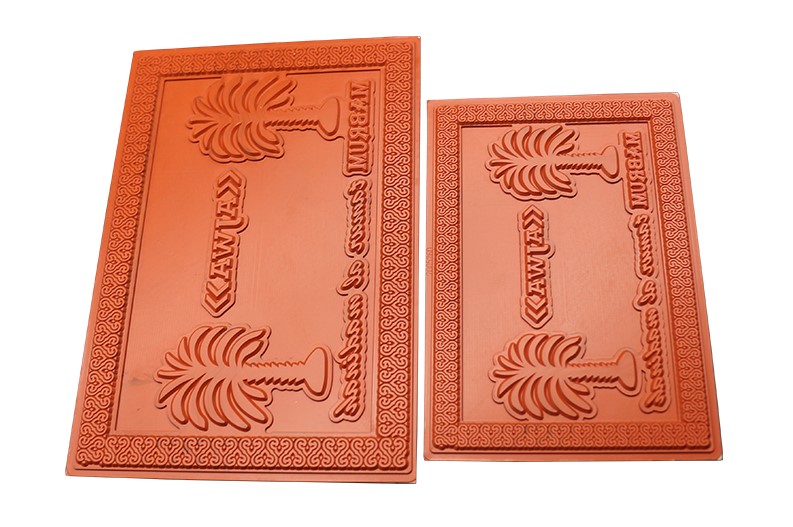
What Is Embossing?
Embossing is a mechanical die-pressing technique in which a male die and a female die work together to press a packaging material between them, creating a raised three-dimensional design on the surface. Unlike foil stamping, no colour or foil is added — the effect is purely tactile, giving the material a raised texture and depth.
Key Features of Embossing:
- Creates a raised 3D texture — the design physically stands out from the surface
- No colour is added — the effect is entirely tactile and structural
- Delivers best results on paper, cardboard, and leather
- Produces a subtle, elegant, and sophisticated look
- Debossing (where the design is pressed inward) is achieved using the same process in reverse
- Long die life with consistent output across large production runs.
Common Applications of Embossing:
- Brand logos and patterns on packaging boxes and cartons
- Premium business cards and corporate stationery
- Leather goods — wallets, belts, bags, and footwear branding
- Wedding cards, invitation printing, and gift stationery
- FMCG product cartons and pharmaceutical boxes
- Labels, tags, and premium hang-tags for garments
At Surya Engravers, we manufacture Single Level, Multi Level, Sculptured, and Combination Embossing Dies with over 10 years of precision die manufacturing experience in Nashik, Maharashtra.
Hot Foil Stamping vs Embossing: A Direct Comparison
| Feature | Hot Foil Stamping | Embossing |
| Visual Effect | Metallic, shiny, glossy finish | Raised 3D texture — no colour |
| Colour Options | Gold, silver, holographic, custom colours | No colour — natural material surface |
| Touch & Feel | Smooth with a slight raised effect | Clearly raised and tactile |
| Best Materials | Paper, plastic, leather, wood, glass | Paper, cardboard, leather |
| Ideal Use Case | Logos, text, detailed decorative graphics | Brand marks, borders, patterns, textures |
| Production Speed | Fast and consistent for high volumes | Fast and consistent for high volumes |
| Die Material Used | Brass, magnesium, silicon rubber | Steel, aluminium, brass |
| Premium Appeal | High — metallic shine creates luxury impact | High — subtle elegance and depth |
| Best Industries | Cosmetics, jewellery, gifts, beverages | FMCG, pharma, stationery, leather goods |
Combination Dies — The Best of Both Worlds
What if you want the metallic shine of foil stamping and the raised depth of embossing — both on the same packaging, in a single production step?
That is exactly what a Combination Embossing Die (also called a One-Shot Die) delivers.
With a combination die, foil stamping and embossing happen simultaneously in a single machine pass — meaning you get the metallic foil finish and the 3D raised texture at the same time. This offers several significant advantages:
- Saves production time — no need for two separate processes or machine setups
- Perfect registration — the foil and embossed design align perfectly every single time
- Reduces material waste — fewer passes mean less foil and substrate wastage
- Cost-effective for premium packaging — faster production at lower per-unit cost
- Widely used for cigarette cartons, luxury cosmetic boxes, premium gift packaging, and high-value product branding
Surya Engravers manufactures custom Combination Dies in Nashik. To place an order with your artwork, call us at +91 9511212105 or request a free quote here.
How to Choose the Right Technique — 4 Simple Questions
Not sure which option is right for your packaging? Answer these four questions:
1. Do you need a shiny, metallic finish on your packaging? Yes → Go with Hot Foil Stamping No → Consider Embossing
2. Do you only need texture and depth, with no added colour? Yes → Embossing is the perfect choice No → Foil Stamping or a Combination Die
3. Is your packaging material leather, plastic, glass, or wood? Yes → Hot Foil Stamping works best (embossing has limitations on these surfaces) Paper or cardboard → Both techniques will work well
4. Do you want both effects — metallic finish and raised texture — in one step? Yes → A Combination Die is your smartest and most cost-efficient option
5 Expert Tips from a Die Manufacturer in Nashik
Having manufactured dies for packaging companies across India for over a decade, here are five practical tips from the team at Surya Engravers:
Tip 1 — Always share your artwork in vector format (AI or CDR) The precision of your die depends directly on the quality of your design file. Vector files give the cleanest die output with sharp edges and fine detail.
Tip 2 — Choose die material based on your production volume For short runs and soft substrates, aluminium or silicon rubber dies work well. For long-run high-volume production, brass or steel dies offer better durability and longer life.
Tip 3 — Test embossing on your actual substrate before bulk production Different paper weights, cardboard thicknesses, and material finishes react differently to embossing pressure. Always do a test impression first.
Tip 4 — For foil stamping on plastic or glass, use silicon rubber dies Silicon rubber dies offer better flexibility and heat resistance compared to brass dies — making them the preferred choice for curved or non-flat surfaces like bottles and caps.
Tip 5 — Consider combination dies for luxury packaging right from the start If your end product is in the premium or luxury segment, designing with a combination die in mind from the beginning saves significant time and cost in the long run.
Why Choose Surya Engravers for Your Die Manufacturing Needs?
Surya Engravers is based in MIDC Satpur, Nashik, Maharashtra — one of India’s most active industrial manufacturing zones. With over 10 years of experience in CNC engraving and precision die manufacturing, we supply packaging companies, printers, and industrial clients across Nashik, Pune, Mumbai, and India.
What We Manufacture:
- Silicon Rubber Hot Foil Stamping Dies
- Brass and Steel Embossing Dies (Single Level, Multi Level, Sculptured)
- Combination Dies (Foiling + Embossing in one pass)
- Coining Dies, Carbide Dies, Progressive Dies, Profile Dies
- Stamping Dies, Carbide Punches, Profile Punches
- 3-Axis / 4-Axis CNC Engraving Job Work
Why Businesses Trust Surya Engravers:
- ✅ Custom manufacturing — every die built to your exact artwork and specifications
- ✅ Advanced CNC engraving machines — high precision, fine detailing
- ✅ Fast turnaround time — on-time delivery across Maharashtra and India
- ✅ Competitive pricing — premium quality at the best market rates
- ✅ 10+ years of experience — trusted by packaging, pharma, automotive, and FMCG companies
- ✅ Nashik MIDC Satpur location — strategic location for fast delivery to Pune, Mumbai, and beyond
Conclusion
Both hot foil stamping and embossing are powerful packaging finishing techniques — but they serve different purposes and deliver different results.
Choose hot foil stamping when you need a metallic, shiny, eye-catching finish that commands attention on the shelf. Choose embossing when you want a subtle, tactile, three-dimensional effect that communicates quality through touch. And if you want the best of both — choose a combination die for a single-pass premium finish that saves time, reduces cost, and elevates your packaging to a luxury standard.
Getting the right die from the right manufacturer makes all the difference. With the precision, experience, and technology at Surya Engravers, you get dies that perform consistently — batch after batch, order after order.
👉 Get a Free Quote 👉 View Our Products 👉 Contact Us
Also read: What Are Embossing Dies in the Packaging Industry? — Surya Engravers Blog