Embossing dies manufacturer india gives a product that premium, tactile finish — raised logos on leather wallets, textured patterns on invitation cards, branded impressions on packaging. Behind every crisp embossed design is a precision-engineered die. In this guide, we cover everything about embossing dies — what they are, the types available, how they’re made, and how to choose the right manufacturer in India.
What Are Embossing Dies?
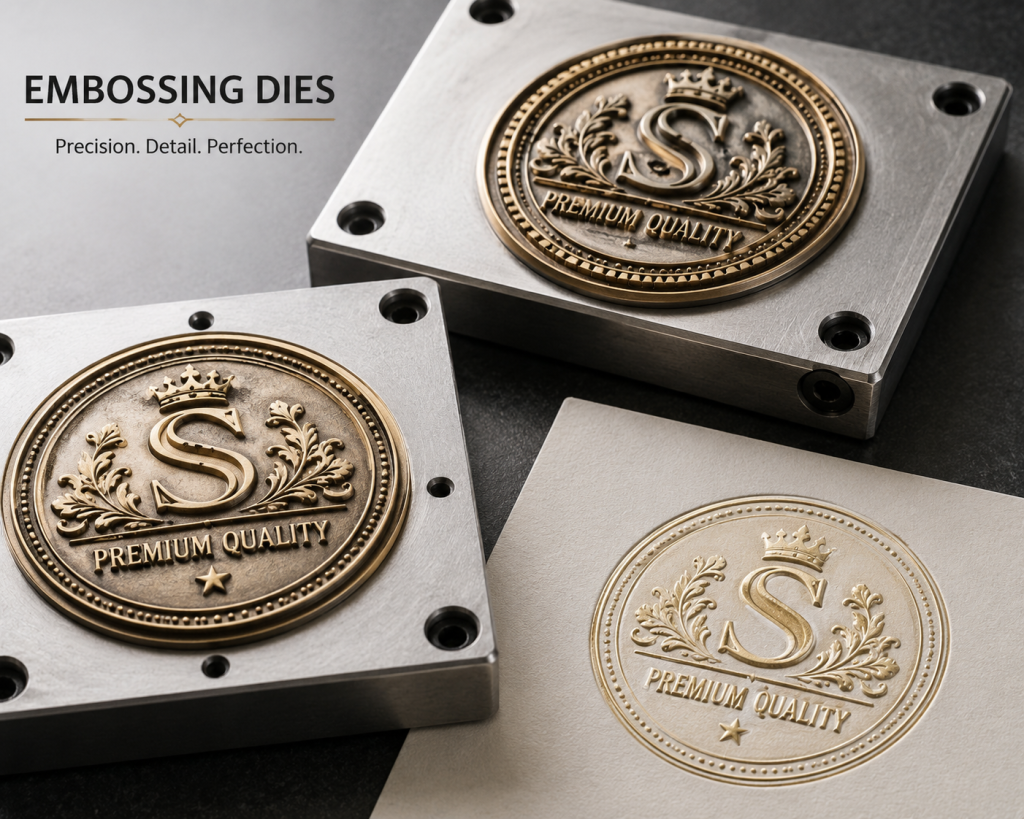
An embossing die is a custom-engraved tool with a raised (male) and recessed (female) surface. When a material — paper, leather, metal, or plastic — is pressed between these two surfaces under controlled pressure, it takes on a 3D raised or recessed impression. Unlike hot foil stamping, embossing doesn’t require foil or color transfer — it’s purely about texture and depth.
Types of Embossing Dies
| Die Type | Best For | Durability | Typical Use |
| Brass Dies | Fine detail, paper & leather | High | Invitation cards, leather tags |
| Steel Dies | Heavy-duty, high-volume runs | very High | Packaging, industrial embossing |
| Copper Dies | Sharp, intricate designs | High | Certificates, premium stationery |
| Magnesium Dies | Short runs, budget projects | Moderate | Small-batch branding |
How Embossing Dies Are Made — Step by Step
- Design is finalized in vector/CAD format based on client’s logo or pattern.
- A matching male-female die pair is CNC-engraved from the chosen metal.
- Dies are heat-treated for hardness and durability.
- The die pair is test-run on the target material to check depth and alignment.
- Final polishing ensures a smooth, defect-free impression.
Deep Analysis Box: Embossing Dies — Key Data Points
Quick Facts for Buyers
- Male-female die alignment is critical — even a 0.1mm misalignment can distort the embossed image or damage the material.
- Brass dies hold finer detail than steel, making them the preferred choice for intricate logos on paper and leather.
- Steel dies handle 3–5x more production cycles than brass before needing re-engraving, making them cost-effective for bulk packaging runs.
- Material thickness dictates die depth — thicker leather or board needs deeper male-female clearance than thin paper stock.
- Blind embossing (no ink/foil) vs. combination embossing (foil + emboss together) require different die tolerances — always specify which one you need.
- India’s packaging, stationery, and leather goods sectors are the largest buyers of custom embossing dies, driven by premium branding demand.
Industries That Use Embossing Dies in India
- Leather Goods — wallets, belts, bags, passport covers
- Stationery & Publishing — invitation cards, certificates, notebooks
- Packaging — rigid boxes, premium cartons
- Corporate Gifting — branded diaries, folders
- Pharmaceuticals — blister foil embossing for batch/brand marks
Why Choose Surya Engravers for Embossing Dies
Based in Nashik (MIDC Satpur), Surya Engravers manufactures precision embossing dies in brass, steel, and copper using CNC engraving technology. Every male-female die pair is engineered to match your exact material, thickness, and design complexity — with clients across Nashik, Pune, Mumbai, and pan-India.
How to Choose the Right Embossing Die
What material are you embossing? → Paper/leather = brass; heavy board/metal = steel.
What’s your production volume? → High volume = steel (durability); short run = brass/magnesium.
Blind emboss or combination with foil? → Specify upfront — die depth differs.
How intricate is the design? → Fine detail needs brass or copper for sharper results.
Frequently Asked Questions (FAQ)
Q1. What is the difference between embossing and debossing?
Embossing raises the design above the surface, while debossing presses it inward, creating a recessed impression. Both use a similar male-female die setup, just with reversed pressure direction.
Q2. Which material is best for embossing dies?
Brass is ideal for fine, detailed work on paper and leather. Steel is better suited for high-volume industrial embossing due to its superior durability.
Q3. Can embossing dies be combined with foil stamping?
Yes, this is called combination embossing — foil and emboss are applied together in a single press action, giving a metallic, raised finish. It requires precisely matched dies for both processes.
Q4. How long do embossing dies last?
Steel dies can last through thousands of production cycles with proper maintenance. Brass dies, while sharper in detail, wear faster and suit shorter runs.
Q5. How much does a custom embossing die cost in India?
Cost varies by material, size, and design complexity. Brass dies for smaller runs are generally more economical, while steel dies cost more upfront but offer better long-term value for bulk production.
Q6. Do you manufacture embossing dies across India?
Yes, Surya Engravers manufactures and ships custom embossing dies to clients across Nashik, Pune, Mumbai, and pan-India.
Need precision embossing dies for your leather, paper, or packaging products? Contact Surya Engravers for a custom quote tailored to your material and design.