In modern industrial manufacturing, surya’s progressive dies manufacturer nashik speed and precision are not optional — they are essential. When a factory needs to produce thousands of identical metal components every hour without compromising on quality or dimensional accuracy, one tool makes it possible: the progressive die.
Progressive dies are one of the most powerful and efficient tooling solutions available in metal stamping today. From automotive body parts to electronic connectors, from packaging hardware to household appliance components — progressive dies are quietly working behind the scenes in nearly every industry that manufactures metal parts at scale.
In this blog, Surya Engravers — a leading progressive dies manufacturer in Nashik — explains everything you need to know about progressive dies: what they are, how they work, what types exist, which industries use them, and why they are a smarter investment than conventional single-stage dies.
What Are Progressive Dies?
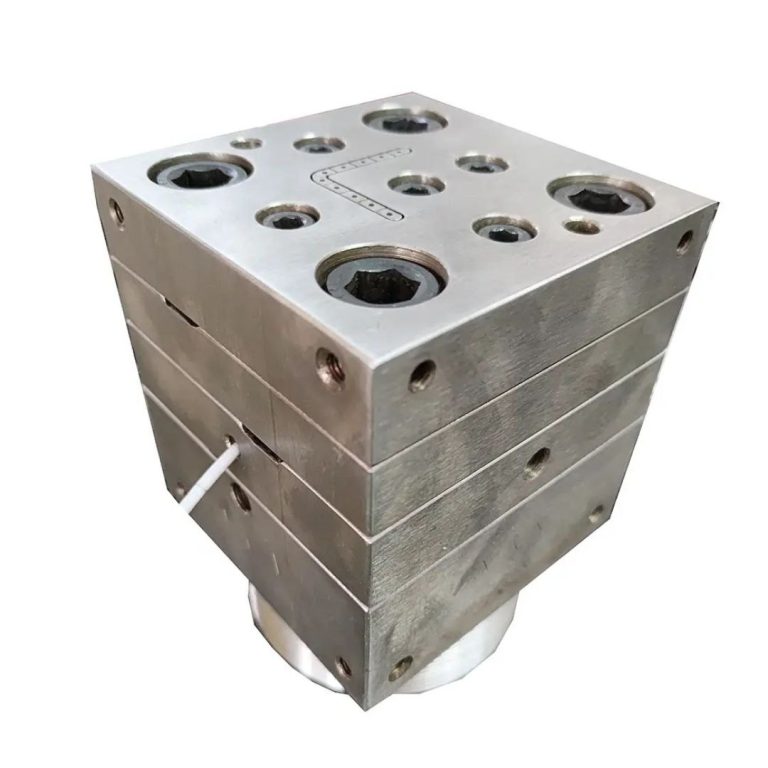
A progressive die is a multi-stage precision tool used in a stamping press that performs multiple operations — such as blanking, piercing, bending, forming, and cutting — on a metal strip in a single continuous pass through the press.
The metal strip (also called a coil or strip stock) is fed automatically through the die station by station. At each station, a specific operation is performed on the strip. By the time the strip exits the last station, a fully formed, finished metal component is produced — with every press stroke.
In simple words: one press stroke = one finished part.
This is what makes progressive dies incredibly efficient for high-volume production. There is no need to move the workpiece from machine to machine. Everything happens inside a single die, in a single press, automatically.
How Do Progressive Dies Work? Step-by-Step
Understanding how a progressive die works helps explain why it is so valued in manufacturing. Here is the process:
Step 1 — Strip Feeding
A metal coil or strip (typically steel, stainless steel, copper, brass, or aluminium) is loaded onto an automatic feeder attached to the stamping press. The feeder advances the strip by a fixed distance — called the “pitch” or “feed length” — with every press stroke.
Step 2 — Pilot Holes / Carrier Strip
In the first station, pilot holes are punched into the strip. These holes are used by pilot pins in subsequent stations to ensure the strip is precisely positioned at every stage — maintaining tight tolerances throughout the entire operation.
Step 3 — Sequential Operations at Each Station
As the strip advances station by station, different operations are performed:
- Blanking — cutting the outer shape of the part
- Piercing — punching holes or slots in the component
- Notching — removing material from the edges
- Bending — forming the component into required angles
- Drawing — forming deep cup or box shapes
- Coining/Embossing — adding surface details or raised features
- Cutoff/Parting — separating the finished part from the strip
Step 4 — Finished Part Output
At the final station, the finished component is cut free from the carrier strip and collected — either falling into a bin below the press or being picked by an automated system. Scrap strip exits from the other end.
Step 5 — Continuous Production
The entire cycle repeats with every press stroke. A modern progressive die setup can produce 100 to 1,500+ parts per minute depending on the component complexity and press speed.
Types of Progressive Dies manufacturer nashik
Progressive dies are not one-size-fits-all. They are designed based on the type of operations required and the complexity of the final component. Here are the main types:
Blanking Progressive Dies
These dies blank (cut out) the flat shape of a component from the strip as the primary operation, combined with other operations like piercing and bending in subsequent stations. Widely used for flat metal parts, brackets, and plates.
Piercing Progressive Dies
Designed primarily for punching multiple holes, slots, or cutouts in metal components. Often used in electrical panels, chassis components, and sheet metal enclosures.
Bending Progressive Dies
These perform bending operations at various stations to form the component into required angles and profiles — L-shapes, U-shapes, Z-bends, and more. Common in brackets, clips, and connectors.
Drawing Progressive Dies
Used for deep drawing operations where a flat metal blank is progressively formed into a cup, box, or cylindrical shape. Used in the production of cans, housings, and shells.
Compound Progressive Dies
These combine blanking and piercing in a single station (compound action) while other stations handle additional forming operations. Used for components requiring very tight tolerances between hole positions and outer edges.
Fine Blanking Progressive Dies
High-precision progressive dies used where exceptionally smooth, burr-free edges are required — such as in automotive safety components, gears, and medical devices.
Multi-Slide Progressive Dies
Used for complex components requiring forming from multiple directions simultaneously. Common in electronic terminals, connectors, and springs.
Industries That Use Progressive Dies
Progressive dies are used across virtually every industry that manufactures metal parts in volume:
Automotive Industry
Progressive dies produce millions of automotive components including brackets, clips, terminals, body panels, seat belt components, airbag parts, and engine mounts. The high production speed and consistency make progressive dies the backbone of automotive stamping operations.
Electronics & Electrical Industry
Terminals, connectors, lead frames, contact springs, bus bars, and switch components are all produced using progressive dies. The ability to maintain micron-level tolerances makes them ideal for miniaturized electronic parts.
Packaging Industry
Metal caps, closures, aerosol can ends, aluminium seals, and container components are produced using progressive stamping dies at very high speeds.
Home Appliances Industry
Components for washing machines, refrigerators, air conditioners, and kitchen appliances — including hinges, panels, brackets, and motor laminations — are stamped using progressive dies.
Hardware & Fastener Industry
Washers, clips, clamps, retaining rings, and various hardware components are manufactured in high volumes using progressive dies.
Medical Devices Industry
Surgical instruments, implant components, and diagnostic device parts require extremely tight tolerances and burr-free edges — progressive fine blanking dies deliver exactly this.
Defence & Aerospace
Precision sheet metal components for defence equipment and aerospace assemblies are produced using progressive dies with stringent quality requirements.
Progressive Dies vs Conventional Single-Stage Dies
Many manufacturers start with conventional single-stage dies and later switch to progressive dies as production volumes grow. Here is a clear comparison:
| Feature | Progressive Dies | Single-Stage Dies |
| Operations per stroke | Multiple (5–20+) | One |
| Production speed | Very High (100–1500+ ppm) | Low to Medium |
| Labour requirement | Minimal (automated) | Higher |
| Part consistency | Excellent | Good |
| Tooling cost | Higher upfront | Lower upfront |
| Cost per part | Very Low | Higher |
| Best for | High volume production | Low volume / prototypes |
| Setup time | Longer | Shorter |
| Floor space needed | Less (single press) | More (multiple machines) |
| Scrap generation | Optimized | Higher |
Conclusion from this comparison: For any manufacturer producing more than 10,000 parts per month of the same component, progressive dies almost always deliver a lower cost per part and better ROI than conventional dies — even after accounting for the higher initial tooling investment.
Key Benefits of Progressive Dies
1. Extremely High Production Speed
Progressive dies can complete multiple operations in a single press stroke, enabling production rates that are simply not achievable with single-stage tooling. This dramatically increases throughput without adding machines or operators.
2. Consistent Part Quality
Since every operation is performed within the same die with the same press, dimensional consistency is maintained part after part. There is no accumulation of errors from transferring workpieces between multiple machines.
3. Low Labour Cost
Progressive die operations are highly automated — an operator sets up the press and monitors it, while the feeder, press, and die do all the work. This reduces labour cost per part significantly.
4. Reduced Floor Space
Instead of multiple machines performing individual operations, a single press with a progressive die handles everything — saving valuable factory floor space.
5. Lower Cost Per Part at Scale
Although the initial tooling investment is higher than single-stage dies, the cost per part produced by a progressive die is significantly lower at high volumes — making it the most economical choice for mass production.
6. Minimal Material Waste
Progressive die designs are optimized for material utilization. Strip layouts are engineered to maximize the number of parts per metre of strip, minimizing scrap and reducing raw material cost.
7. Suitable for Complex Components
Progressive dies can perform intricate combinations of blanking, piercing, bending, and forming in a single tool — producing complex components that would otherwise require multiple setups and machines.
How Progressive Dies Are Manufactured at Surya Engravers
At Surya Engravers, Nashik, we manufacture progressive dies using a combination of advanced CNC engraving machines, precision grinding, wire EDM, and quality inspection equipment. Here is our manufacturing process:
Design & Engineering
Every progressive die begins with detailed engineering design. We work with customer drawings, samples, or specifications to design the die layout — including strip layout, station sequence, pilot locations, and component geometry. We use CAD/CAM software to ensure accurate design before any machining begins.
Material Selection
We select high-quality die steel grades — including D2, H13, M2 HSS, and tungsten carbide for punch and die inserts — based on the material being stamped and the required production volume. Carbide inserts are recommended for very high-volume and abrasive material applications.
CNC Machining & Wire EDM
Die components are precision machined using our CNC engraving machines and Wire EDM equipment. This ensures tight tolerances on all die components — punch profiles, die apertures, guide elements, and pilots.
Heat Treatment
Critical die components are heat treated to achieve the required hardness (typically HRC 58–62 for tool steel components) for long service life and wear resistance.
Assembly & Try-Out
The die is assembled and tried out in the press with sample strip material. First-off samples are measured and inspected to verify dimensional conformance before the die is approved for production use.
Quality Inspection
All progressive dies from Surya Engravers are inspected using precision measurement equipment before dispatch — ensuring every die meets the customer’s dimensional and performance requirements.
Progressive Dies by Surya Engravers, Nashik
Surya Engravers is a trusted progressive dies manufacturer in Nashik, Maharashtra, serving clients across Nashik, Pune, Mumbai, Aurangabad, and pan-India. With over 10 years of experience in precision die manufacturing and CNC engraving, we deliver progressive dies that combine accuracy, durability, and production efficiency.
We manufacture progressive dies for:
- Automotive components
- Electrical terminals and connectors
- Packaging hardware
- Sheet metal brackets and clips
- Appliance components
- Custom components as per drawing
We offer custom progressive die manufacturing as per client drawings, samples, or specifications — with competitive pricing and fast delivery.
📞 Call: +91 9511212105 / +91 7798783035
📧 Email: suryaengraver@gmail.com
🌐 Website: www.suryaengraver.com
📍 Address: Plot No. 18/P/9, MIDC Satpur, Nashik, Maharashtra
Conclusion
Progressive dies represent the pinnacle of efficiency in metal stamping and sheet metal manufacturing. By combining multiple operations into a single automated tool, they deliver unmatched production speed, consistent part quality, and the lowest possible cost per part at high volumes.
For any manufacturer looking to scale up production, improve part consistency, or reduce per-unit manufacturing cost — investing in a well-engineered progressive die is one of the smartest decisions available.
If you are looking for a reliable progressive dies manufacturer in Nashik with proven expertise in precision tooling, contact Surya Engravers today. We will help you choose the right die design, material, and configuration for your specific application and production volume.
Frequently Asked Questions (FAQs)
Q: What is a progressive die used for?
A: A progressive die is used to perform multiple stamping operations — such as blanking, piercing, bending, and forming — on a metal strip in a single continuous pass through a press, producing a finished component with every press stroke.
Q: How many operations can a progressive die perform?
A: A progressive die can perform anywhere from 3 to 20+ operations depending on the complexity of the component. Each station in the die performs one or more specific operations as the strip advances.
Q: What materials can be stamped using progressive dies?
A: Progressive dies can stamp a wide range of metals including mild steel, stainless steel, copper, brass, aluminium, and high-strength steel alloys — depending on the die material and design.
Q: How long do progressive dies last?
A: The service life of a progressive die depends on the material being stamped, the die material, and maintenance practices. Tool steel progressive dies typically last 500,000 to 2,000,000 strokes; carbide-inserted dies can last 5,000,000+ strokes.
Q: Where can I get progressive dies manufactured in Nashik?
A: Surya Engravers manufactures custom progressive dies in Nashik, Maharashtra. Contact us at +91 9511212105 for specifications, pricing, and delivery timelines.
Q: What is the difference between a progressive die and a compound die?
A: A compound die performs blanking and piercing simultaneously in a single station in one stroke, producing one part per stroke. A progressive die performs multiple different operations across several stations, with the strip advancing through each station — also producing one part per stroke but enabling far more complex component geometries.